
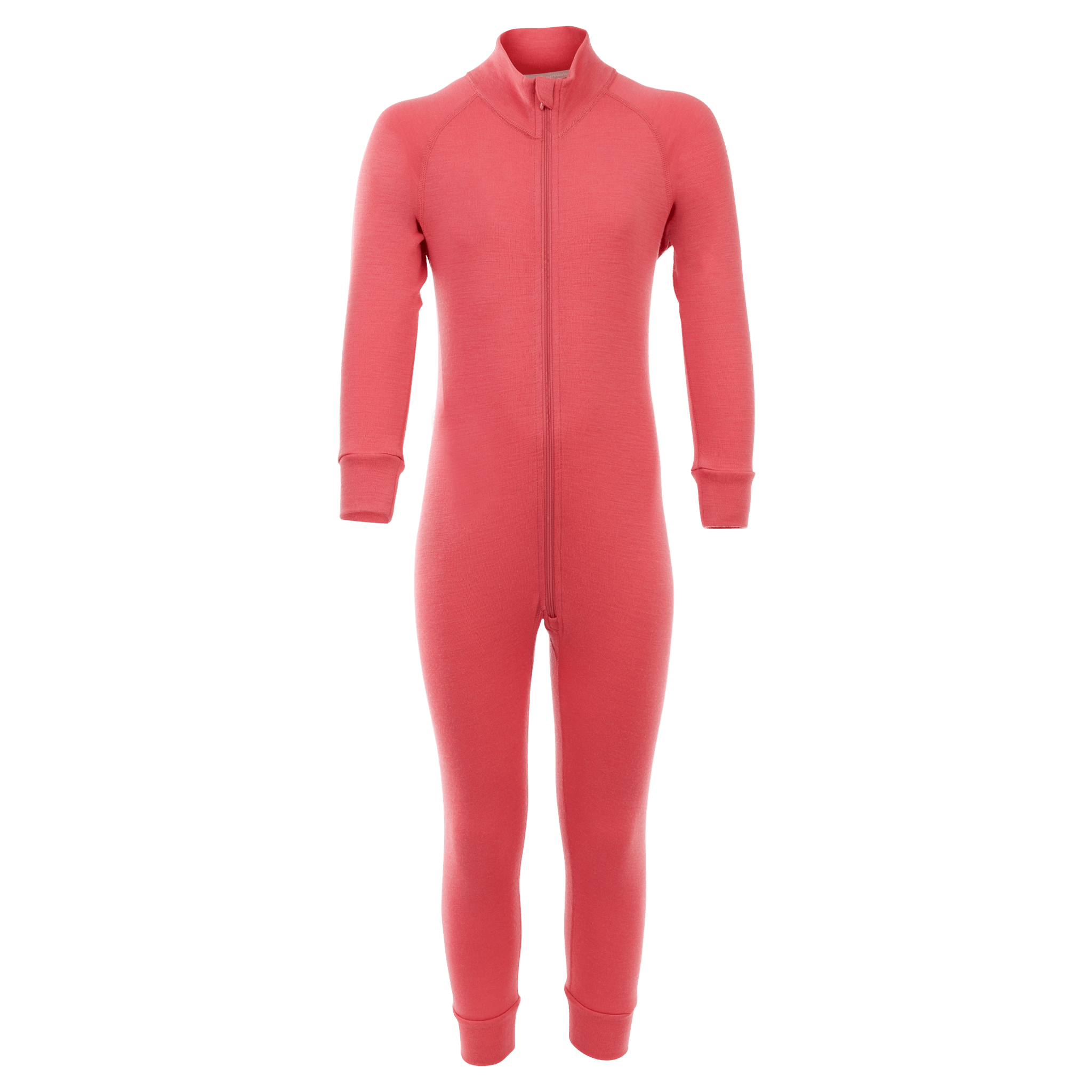
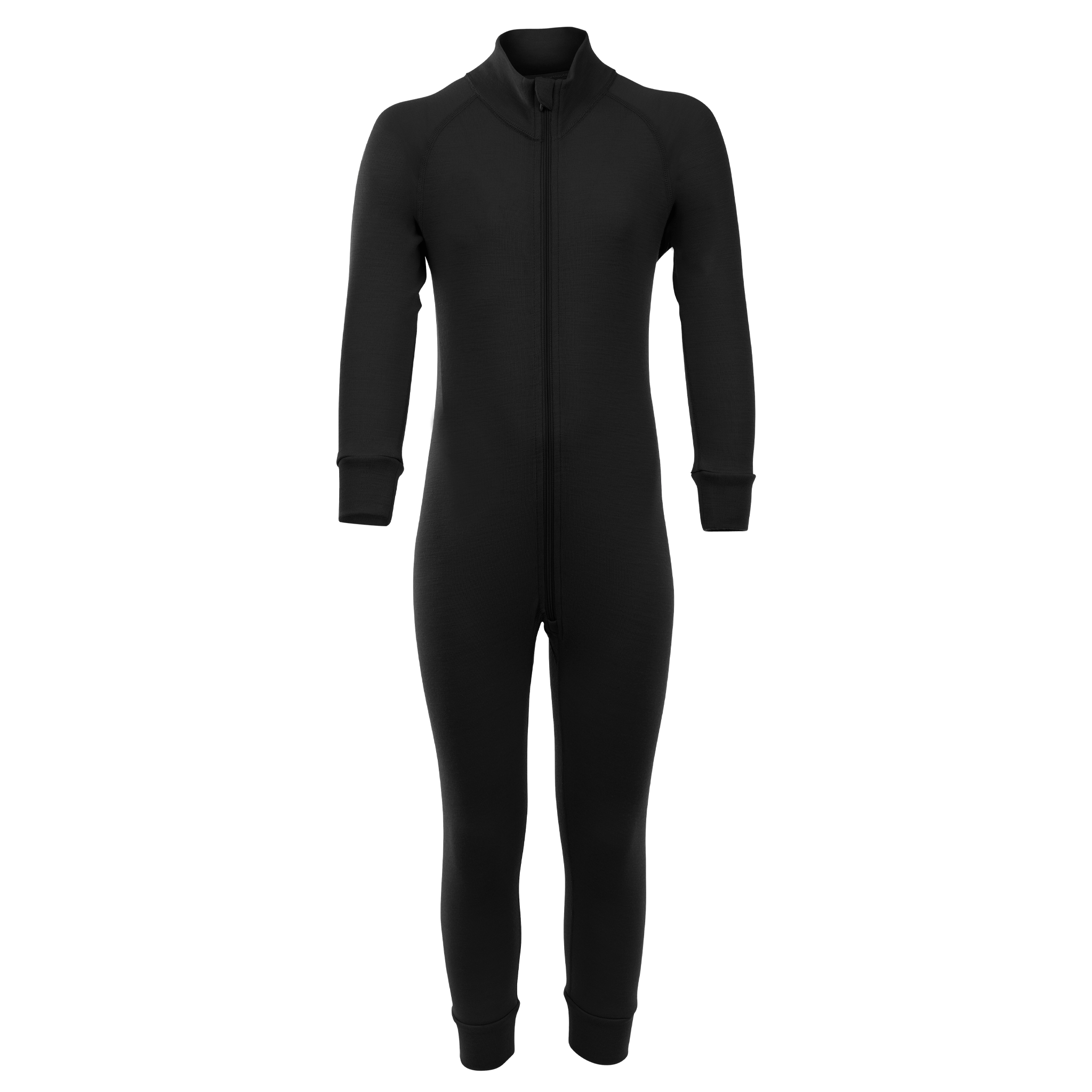
Kids' merino mid layers and overalls – the warm layer under outerwear
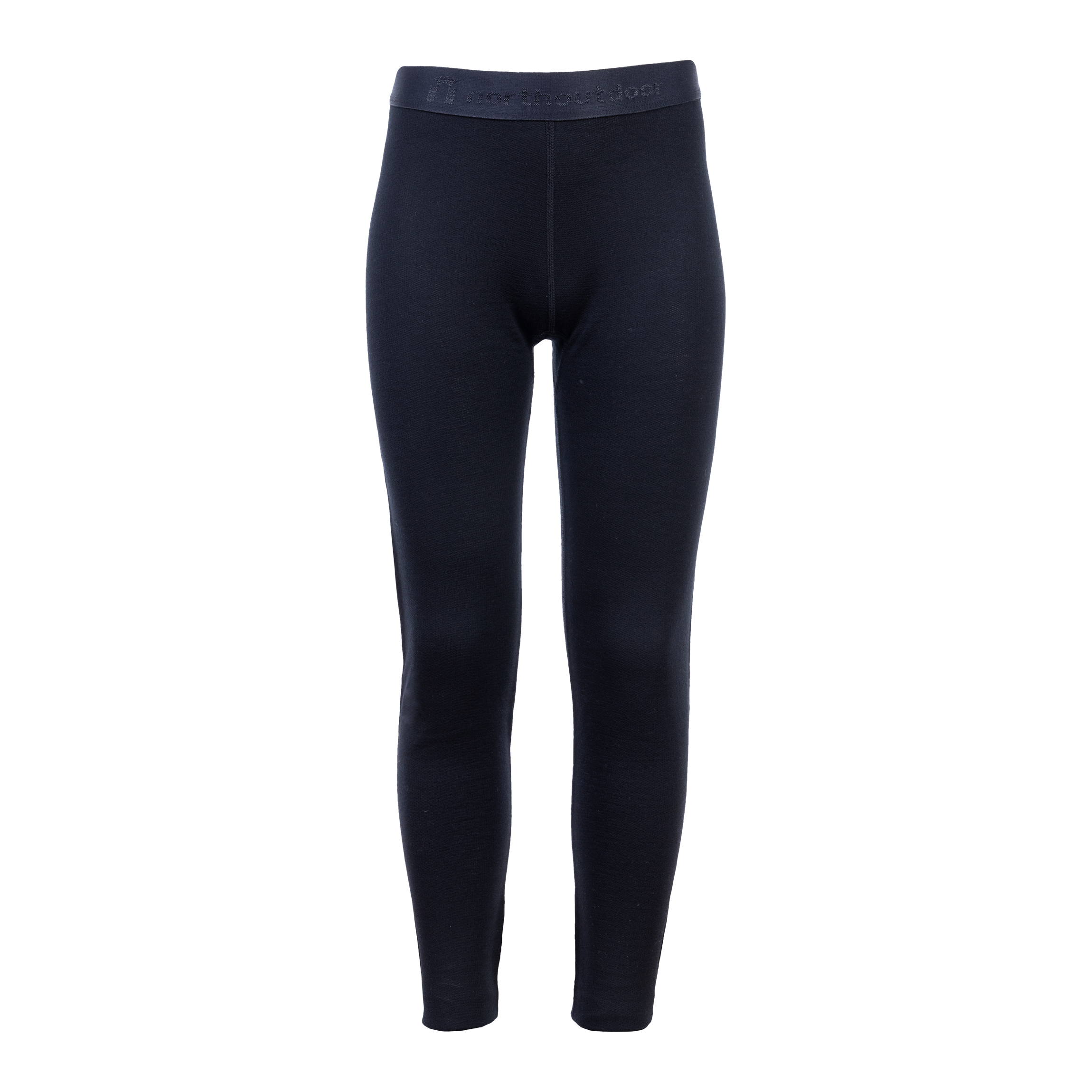
The mid layer is the part of the outfit that produces the warmth. The base layer moves moisture away from the skin and the shell stops the wind, but the warmth comes from air trapped in the knit of the mid layer. In these children's overalls, jackets and trousers the knit is 260 g/m², the thickest in the range.
Filters
3 products
What is the difference between a base layer and a mid layer?
A base layer is thin and close-fitting, and its job is to move moisture away from the skin. The mid layer goes on top of it and is clearly thicker: its job is to keep the child warm. In cold weather a child needs both; in milder weather the mid layer alone under a shell is often enough.
An overall, or a separate jacket and trousers?
- Overall – for smaller children. It does not ride up the back during play and keeps snow out.
- Separate jacket and trousers – for older children and teens. Layers can be adjusted separately, and toilet trips are easier to manage alone.
Does merino wool itch on a child?
Prickle comes from wool fibres over 30 microns, which do not bend against the skin but press into it. In these products the merino fibre is clearly below that, so it bends softly and does not irritate the skin of most children. Skin sensitivity varies, and the mid layer is usually worn over a base layer, so it does not touch the skin directly.
Should you size up?
A mid layer is meant to be roomier than a base layer, so that air stays in the knit to warm the child. One size up therefore also works better in terms of warmth – a mid layer that is too tight insulates less well. Check the measurements in the size guide.
How do you wash children's merino garments?
At 30 °C on a wool or delicate programme, with a wool detergent of pH 7 or lower. No fabric softener, no tumble dryer. Merino wool largely refreshes by airing, so it needs washing less often than cotton.
See also
We go through the order of the layers in the layering guide. Complete the outfit with children's merino socks, or browse the full kids' range.
Mulesing-free merino wool
We use only mulesing-free merino wool in our products. All products are OEKO-TEX® STANDARD 100 certified.
