
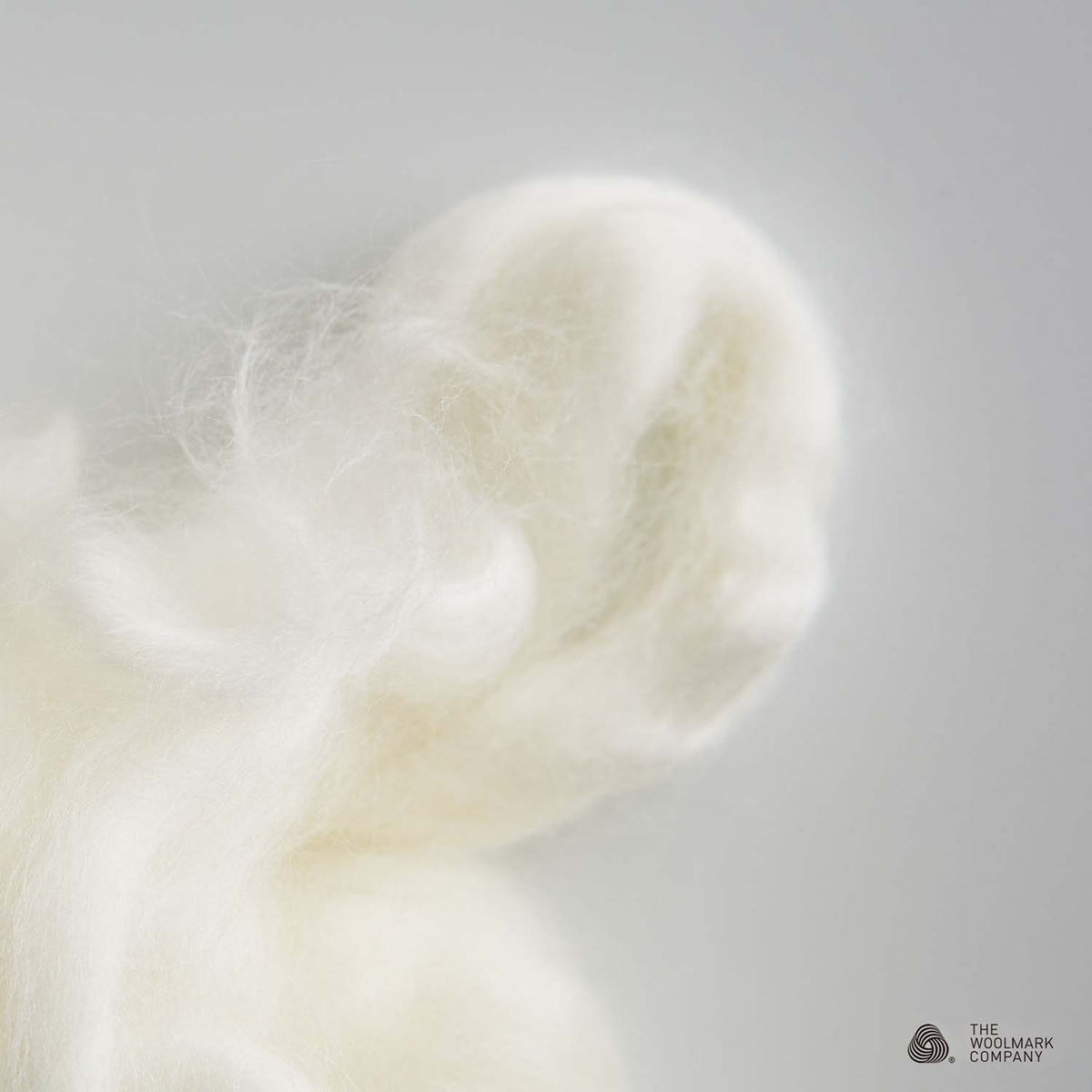

Merino fibre is so fine that for most people it doesn't trigger the skin's itch response. Itch comes from thick wool fibres over 30 microns, which don't bend against the skin but press into its nerve endings instead. The merino in North Outdoor base layers measures 17.5–19.5 microns – around a third of the thickness of traditional sheep's wool. The fibre bends softly against the skin, and the feel is closer to cotton than to a wool jumper. Skin sensitivity does vary from person to person, though.
Why does ordinary wool itch when merino wool doesn't?
It comes down to fibre thickness, not to the type of wool as such. Wool fibre thickness is measured in microns, or thousandths of a millimetre. The thicker the fibre, the stiffer it is. A stiff fibre end doesn't bend against the skin but presses into it, and the skin reads that pressure as irritation. This is what's known as the itch response.
Research literature generally puts the threshold at around 30 microns: fibres finer than that bend, thicker ones don't. Traditional sheep's wool typically falls in the 30–40 micron range – right on the side of the line where itch begins. Merino stays clearly below it.
The merino sheep's exceptionally fine fleece is an adaptation. The breed developed in conditions where temperatures swing by tens of degrees between summer and winter, and fine but dense wool regulates heat better than thick wool does. The same property that helps the sheep is what makes the wool soft against your skin.

How fine is North Outdoor's merino wool?
Below are the measured values for our base layer ranges. The micron figure tells you about softness; the knit weight (g/m²) tells you about warmth.
| Range | Merino micron | Knit weight | Material |
|---|---|---|---|
| Touch 150 | 17.5 | 150 g/m² | 83% merino wool, 12% recycled polyamide, 5% elastane |
| Motion 150 | 17.5 | 150 g/m² | 83% merino wool, 12% recycled polyamide, 5% elastane |
| Sensitive 225 | 19.5 | 225 g/m² | outer face 100% merino wool, inner face 100% bamboo viscose |
| Arctic 260 | 19.5 | 260 g/m² | 100% merino wool |
For comparison: a human hair is typically 50–100 microns thick. The merino fibre in the Touch and Motion ranges is therefore around a third of the thickness of a hair.
Can merino wool still feel uncomfortable?
It can, and there are three common reasons. The first is habit: if your skin is used to cotton alone, any wool will feel different at first. That sensation usually settles after a few wears.
The second reason is fit. A base layer that's too loose rubs as you move, and friction feels like irritation even when the fibre itself is soft. A base layer is meant to sit close to the skin.
The third reason is genuine sensory sensitivity. Some people react to every grade of wool regardless of fibre thickness. This isn't a matter of getting used to it, and it doesn't go away with wear.
What helps if all wool irritates your skin?
The Sensitive range was designed for sensitive skin. Its knit has two layers: the outer face is mulesing-free merino wool and the inner face – the side against your skin – is 100% bamboo viscose. The wool handles temperature regulation and moisture transfer on the outside, but your skin never touches wool at all.
Sensitive products also have non-chafing seams and a close-fitting cut, because seams are a common source of irritation in a base layer.
Does merino wool become itchy after washing?
Not if you wash it correctly. An itchy feeling after washing is almost always down to the wrong detergent. Ordinary laundry detergents are alkaline, and an alkaline solution clings to the wool fibre and roughens its surface. The fibre stiffens, and a stiff fibre feels different against the skin than it did before washing.
Use a wool detergent with a pH of 7 or below, and don't use fabric softener. Merino wool is naturally soft and anti-static, so softener adds nothing – it only leaves a film on the surface. You'll find detailed instructions in our merino wool care guide.
Which North Outdoor products suit sensitive skin?
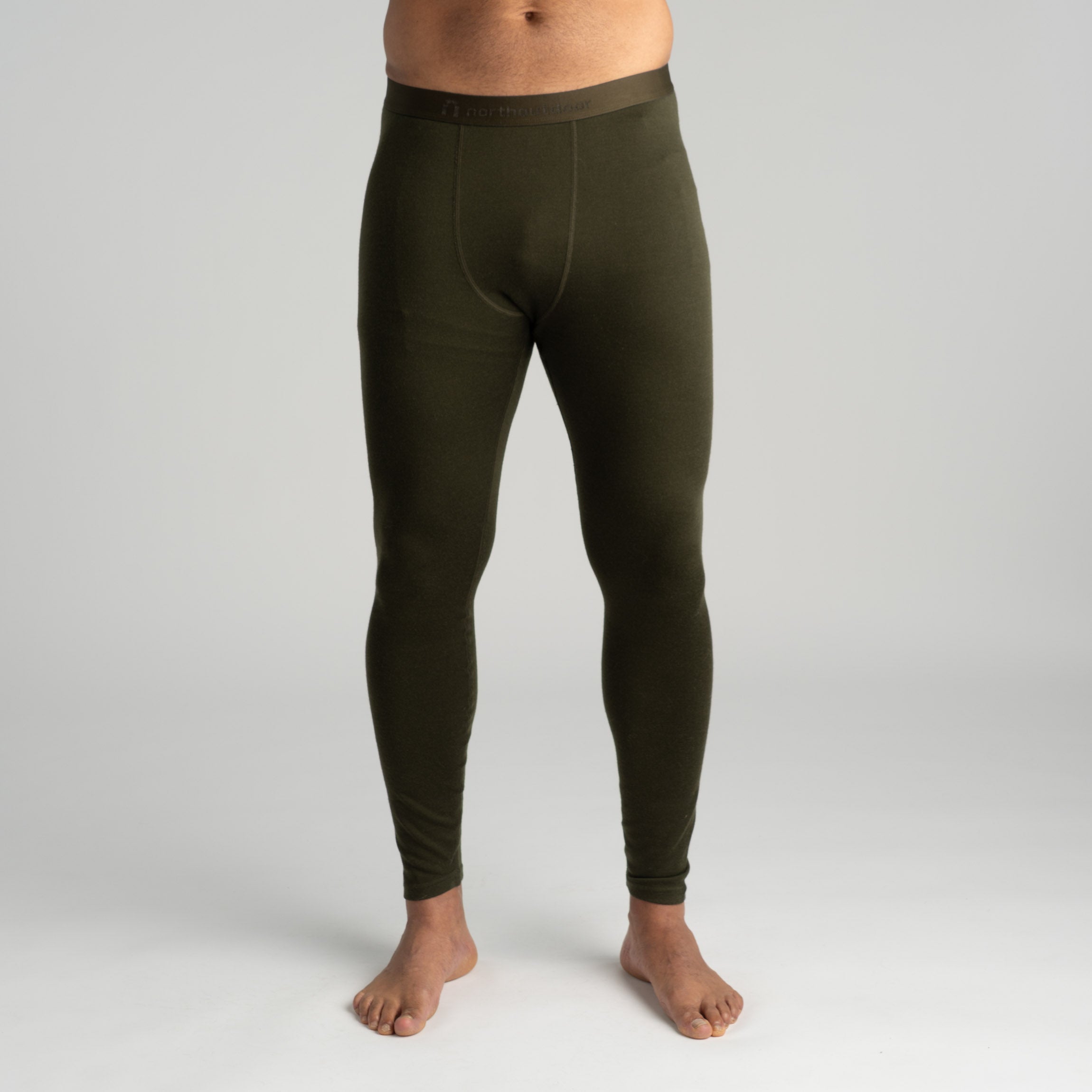
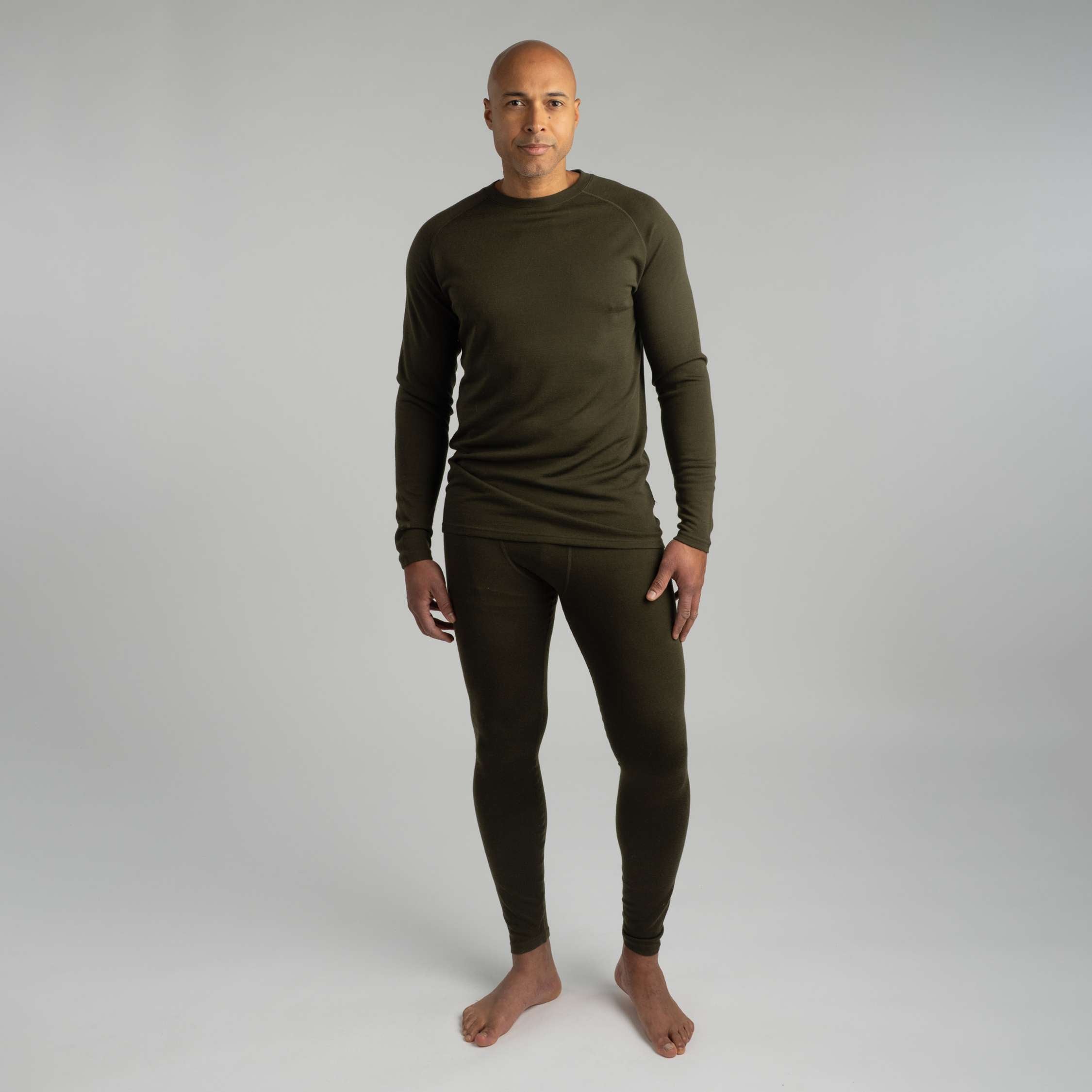
- Sensitive 225 range – bamboo viscose against the skin, wool on the outer face. The only option if every kind of wool irritates you.
- Touch 150 and Motion 150 – 17.5 micron merino, the finest and softest option with a 100% wool face.
- Merino wool socks – the skin on the sole of the foot is thin, so fibre softness matters even more.
- Merino wool base layers for kids – children's skin is thinner than adult skin and reacts more readily. The base layers have soft bamboo viscose against the skin and merino wool on the outside.
Every North Outdoor product is OEKO-TEX® STANDARD 100 certified, which means an independent testing institute has verified that it contains no substances harmful to health in skin contact.
Frequently asked questions
Does the itch go away over time?
If it's a matter of getting used to wool, yes – usually within a few wears. If it's genuine sensory sensitivity, no.
Does merino wool itch more when you sweat?
No. Merino wool moves moisture away from the skin and feels dry to the touch even when the fibre has absorbed up to 30% of its own weight in moisture.
Does washing a garment before first wear help?
Not with itch. Merino wool contains no irritating residues, so there's no need to wash a new product before wearing it.
Is thicker merino wool itchier?
No. Knit weight (g/m²) tells you about warmth, not about fibre thickness. Arctic 260 is clearly warmer than Touch 150, even though the difference in fibre fineness is only two microns.
North Outdoor is a Finnish company specialising in merino wool clothing. We design our products in Finland. We knit our sweaters and knitwear in our own knitting mill in Oulu. We use only mulesing-free merino wool in our products.
Updated 13 August 2026




Leave a comment
This site is protected by hCaptcha and the hCaptcha Privacy Policy and Terms of Service apply.